

Fillings
A filling is used to repair a tooth that has lost part of its structure through decay (cavity), wear, fracture or damage. Depending on the tooth and how much structure has been lost, we may restore it directly with a material shaped in the mouth, or use a custom-made indirect restoration such as an inlay or onlay. We will recommend the option that best balances strength, appearance and preservation of the natural tooth.

When Might You Need a Filling?
A filling may be needed when part of a tooth has been damaged or lost. Common reasons include:
- Tooth Decay: Decay can create a cavity that needs to be removed and restored.
- Chipped or Broken Teeth: Composite can rebuild smaller areas of damage and restore the natural shape of the tooth.
- Tooth Wear: Teeth worn through grinding or acid erosion may sometimes be rebuilt with composite.
- Trauma: A tooth damaged through an accident or injury may need part of its structure restored.
- Failed Fillings: An older filling that has broken, loosened or developed decay around it may need repairing or replacing.

Direct Composite Fillings
Composite is a tooth-coloured material that bonds directly to the tooth. We can select a shade that blends closely with your natural teeth and carefully shape the material to restore the missing or damaged area.
This makes composite a good option when we want to restore both the strength and appearance of a tooth. It is commonly used for cavities, chips and smaller fractures.
Composite fillings can last for many years, although no filling is permanent. How long yours lasts will depend on its size, position, your bite and the amount of pressure placed on the tooth.
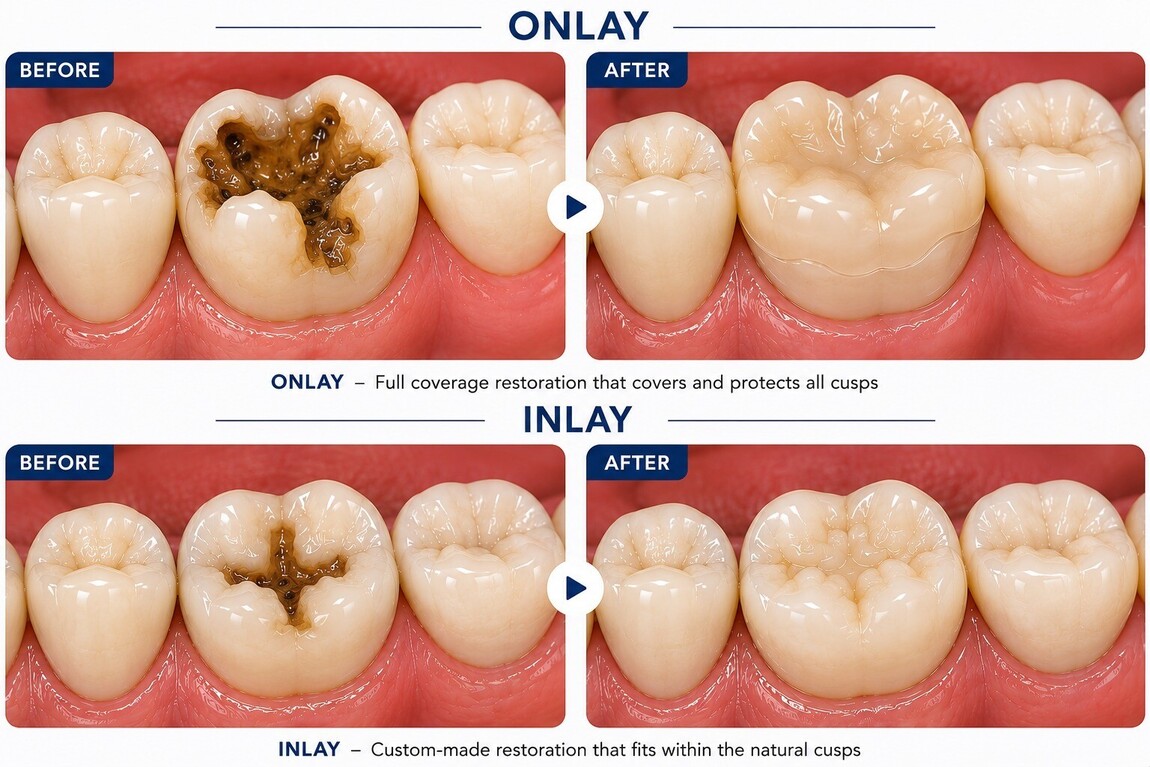
Indirect Fillings
Inlays and onlays are custom-made restorations used when a tooth needs more support than a direct filling can provide, but does not require a full crown.
The tooth is carefully prepared before your inlay or onlay is custom-made by a dental laboratory for a precise fit. Once ready, we secure it to the tooth using a strong dental adhesive, restoring strength and function while preserving as much of your natural tooth as possible.
Unlike a direct filling, an inlay or onlay usually requires two appointments. This allows time for a carefully made restoration that fits naturally, feels comfortable and provides lasting protection for the tooth..

What Happens During a Filling?
Most fillings can be completed in one appointment.
1. Numbing the Area: We may use local anaesthetic to keep the tooth comfortable during treatment.
2. Preparing the Tooth: We remove any decay or weakened tooth structure and prepare the area for the filling.
2. Placing the Composite: The composite is placed carefully and shaped to rebuild the tooth.
3. Hardening the Filling: A special light is used to set the composite.
4. Checking Your Bite: We check how your teeth meet and make any small adjustments needed before you leave.

Aftercare
* Eating and Drinking:
Wait until the numbness has completely worn off before eating or having hot drinks. This helps prevent accidentally biting your cheek or burning your mouth.
Once the anaesthetic has worn off, you can normally eat and drink as usual because the composite is fully set before you leave.
* Oral Hygiene:
Continue brushing twice daily with fluoride toothpaste and cleaning between your teeth as normal. Keeping plaque under control helps protect both the filling and the surrounding tooth.
* Sensitivity and Discomfort:
Some mild sensitivity to pressure, hot or cold can happen after a filling and usually settles.
If the tooth remains painful, your bite feels uneven or the sensitivity is not improving, contact us so we can check the filling and make any adjustment needed.