

For adults with a low risk of tooth decay, bitewing X-rays are often taken around every two years. They may be needed more often if your risk is higher or if we are monitoring a specific concern. We review this each time rather than taking X-rays automatically.
Dental & Extra-Oral Radiology
Most dental problems cannot be fully understood by looking in the mouth alone.
At Cramond House, we use several types of dental X-rays to look more closely
at your teeth, roots, jaws and nearby structures. This helps us investigate symptoms,
confirm what is causing the problem and plan treatment safely. We will explain why
an image is needed and ask for your permission.
Navigation
Why X-rays Matter
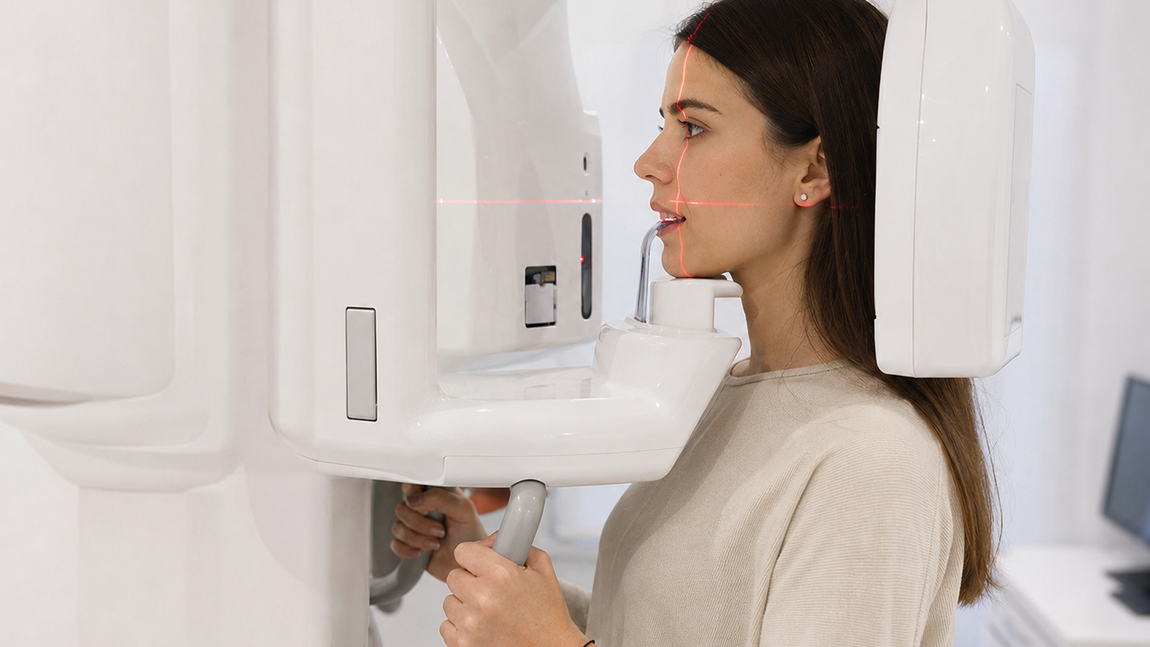
Dental X-rays help us assess your teeth, gums, and jaw more clearly, so we can diagnose problems and plan your care safely. Depending on your needs, we can provide small dental X-rays (intraoral X-rays), full-mouth scans (DPT/panoramic X-rays), and 3D imaging (CBCT) when required.
Intraoral X-rays
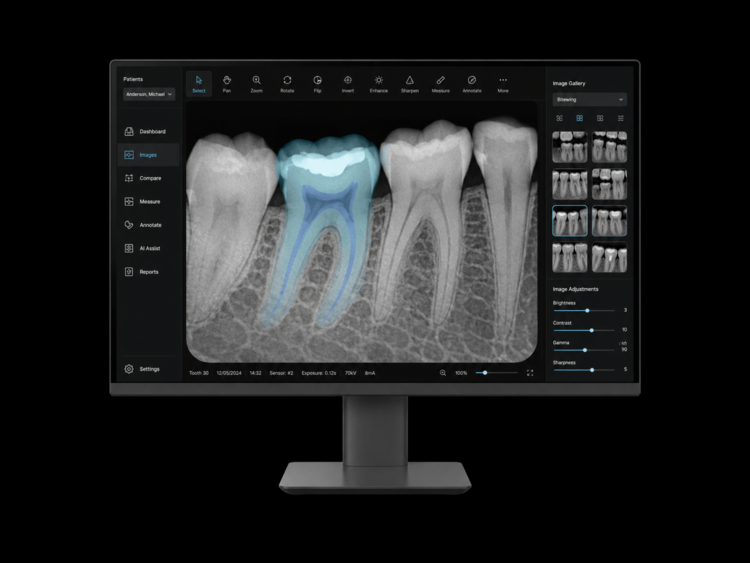
These are the small dental X-rays that many patients will already recognise. We place a small digital sensor inside your mouth to take a clear image of a particular tooth or area.
DPT Panoramic
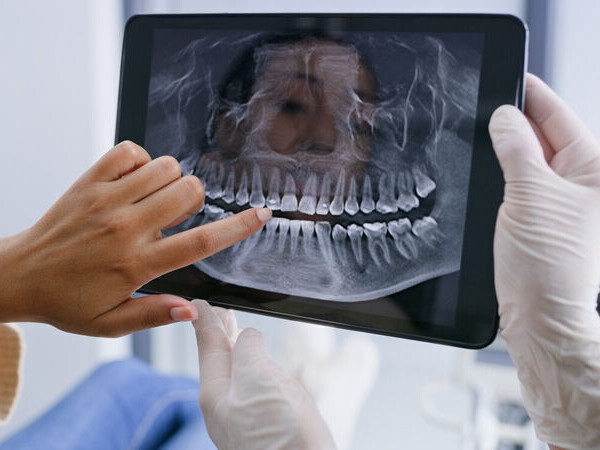
A DPT, also known as an OPG or panoramic X-ray, produces one wide, two-dimensional image showing your teeth and both jaws.
CBCT
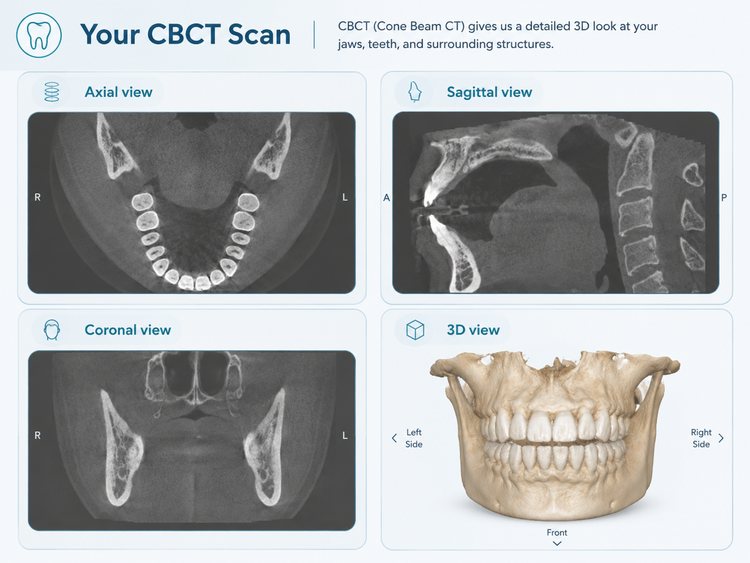
A cone beam CT, or CBCT, scan produces a detailed, 3D image of a selected part of your teeth and jaws. It allows us to view the area from different angles and see the position of the teeth, roots, bone, nerves and nearby structures more clearly.